Maryland sits in a unique position when it comes to natural disaster risk. The state is far enough north to avoid the direct hits that Florida and the Gulf Coast absorb each year, but close enough to the Atlantic coast to take real damage from hurricanes, tropical storms, and nor’easters that track up the eastern seaboard. Add a low-to-moderate seismic zone that has produced damaging earthquakes within recent memory, and Maryland homeowners have more to think about than most people realize.
If your home has been through a significant weather event — or you’re not sure whether it has — this guide walks you through what to inspect, what damage looks like, and when to call a professional.
Does Maryland Get Hurricane Damage?

Yes — and more often than most homeowners expect. Maryland doesn’t typically experience a direct hurricane landfall, but it doesn’t need to. Tropical systems that make landfall hundreds of miles to the south routinely track northward along the coast, bringing sustained winds, storm surge along the Chesapeake Bay and its tributaries, and rainfall totals that overwhelm drainage systems and saturate roof systems for hours at a time.
The Atlantic hurricane season runs from June 1 through November 30, with peak activity between mid-August and mid-October. During that window, any tropical system that develops along the southeastern coast or in the Gulf has the potential to affect Central Maryland and Anne Arundel County — sometimes with little warning as storms intensify rapidly before reaching the mid-Atlantic.
Tropical Storm Isabel in 2003 caused widespread flooding and wind damage across the region. Hurricane Sandy in 2012 drove historic storm surge into the Chesapeake, damaged roofs across Anne Arundel and Baltimore counties, and left thousands without power for days. More recently, the remnants of Hurricane Ida in 2021 produced record rainfall across Maryland in a matter of hours.
The damage these systems leave behind — missing shingles, failed flashing, saturated siding, compromised gutters — isn’t always obvious from the ground. That’s why a thorough inspection after any significant storm matters.
How to Inspect Your Roof for Hurricane Damage
Do not get on your roof. Storm-damaged roofs may have loose or missing shingles, wet decking, and weakened structural framing that aren’t visible from the surface. What looks stable from the ground can be unsafe to walk on. Inspect from ground level and from inside, then call a licensed contractor for anything that requires a closer look.
From the ground, look for:
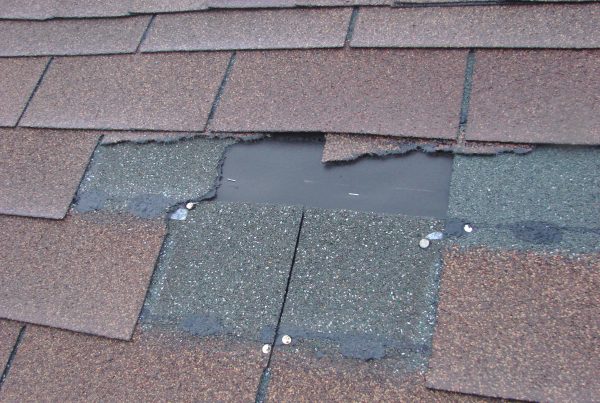
- Missing or displaced shingles — gaps in the roof plane, exposed decking, or shingles on the ground or in the yard are the most visible signs of wind damage. High winds lift shingle edges, break the sealant bond between layers, and can tear sections off entirely, particularly along ridges, hips, and roof edges where wind pressure is highest.
- Lifted or curled shingles — shingles that are still in place but visibly lifted or folded back have lost their seal. They may look minor but allow wind-driven rain to get underneath and into the roof system.
- Damaged or missing flashing — the metal strips around chimneys, skylights, and roof-to-wall transitions are among the first things to fail in high winds. Displaced or bent flashing creates an immediate pathway for water intrusion.
- Dented or detached gutters — gutters that have pulled away from the fascia, are visibly bent, or have downspouts that have separated from the house are a sign of significant wind or debris impact. Damaged gutters direct water against the foundation instead of away from it.
- Debris impact marks — branches, hail, and airborne debris leave impact marks on siding, trim, and roofing. Visible damage to these surfaces often indicates the roof took hits as well.
From inside, look for:
Water stains on ceilings or walls, particularly near chimneys, skylights, and exterior walls. Check the attic for daylight coming through the roof boards, wet or compressed insulation, and any signs of active or dried water intrusion. Damage isn’t always visible immediately — some leaks don’t show up until the next rain event after the storm.
What Hurricane Damage Looks Like Beyond the Roof
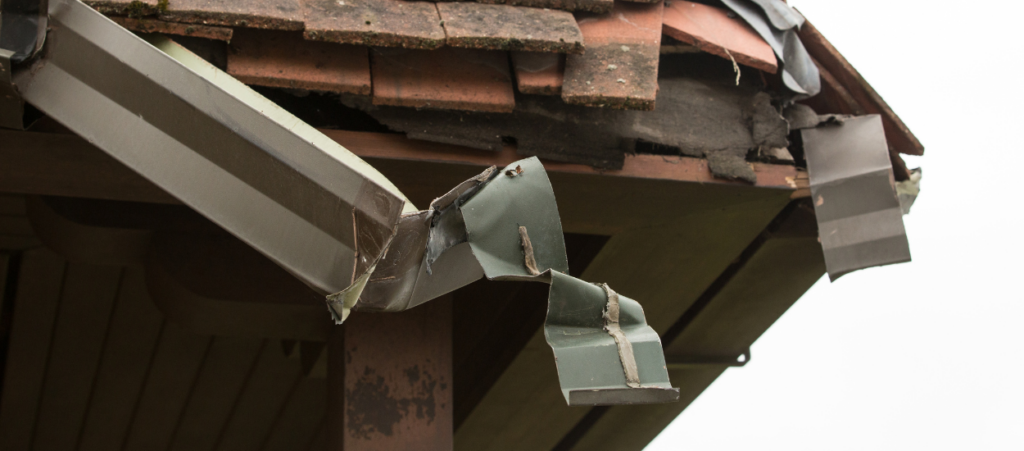
Hurricane and tropical storm damage rarely stops at the roof. A thorough post-storm inspection should cover the full exterior.
Siding — Look for missing panels, cracked or split sections, and siding that has pulled away from the wall. Even small gaps allow wind-driven rain to get behind the siding and into the wall assembly, where moisture damage can develop slowly over months.
Windows and doors — Check for cracked glass, damaged frames, and seals that have failed under pressure. Water infiltration around window and door frames after a storm often indicates frame damage or failed caulking that won’t be visible until the next heavy rain.
Gutters and downspouts — Beyond visible damage, check whether gutters are still properly pitched toward the downspouts. Impact and debris loading can shift gutter alignment without visibly bending them.
Chimney — Look for a displaced or missing chimney cap, cracked mortar joints, and shifted or leaning chimney stacks. Chimney caps that blow off in high winds leave the flue open to rain and debris. Cracked mortar allows water to penetrate brick and accelerate freeze-thaw deterioration through the winter months.
Foundation and exterior trim — Flying debris and fallen branches can cause damage that’s easy to overlook when the more obvious storm damage demands attention. Walk the full perimeter of the house and note anything that looks out of place.
How to Inspect for Earthquake Damage in Maryland
Maryland is not earthquake country in the way that California is, but it sits within a low-to-moderate seismic zone that has produced damaging events. The August 2011 earthquake — centered in Virginia but felt strongly across Maryland, Washington D.C., and much of the mid-Atlantic — was a reminder that seismic events are a real, if infrequent, risk for homeowners in this region.
Earthquake damage to a home’s exterior is different from wind and water damage and requires a different inspection approach.
On the roof, look for:
Cracked or dislodged ridge caps and hip caps — the seismic movement can break the mortar or sealant bonds on these components without visibly disturbing the field shingles. Chimney caps are particularly vulnerable and may be displaced or cracked without appearing damaged from the ground.
Shifted flashing — ground movement can break the seal between flashing and masonry at chimney and skylight transitions. A flashing joint that looks intact may have opened enough to allow water infiltration.
On the exterior, look for:
Cracked brick or masonry — chimney stacks are the most common failure point after a seismic event. Look for horizontal or stair-step cracks in the mortar joints, leaning or shifting of the chimney mass, and any visible separation between the chimney and the house structure. A cracked or unstable chimney is a serious safety concern and should be evaluated by a professional before the fireplace is used.
Foundation cracks — new vertical or diagonal cracks in the foundation, or existing cracks that have visibly widened, should be documented and evaluated. Not all foundation cracks are structural, but any new cracking after a seismic event warrants a professional assessment.
Cracked windows — seismic movement can crack glass and distort frames, compromising both the thermal seal and the structural integrity of the window unit.
Interior doors and windows that no longer open or close properly can indicate that the structure has shifted. This is worth noting even if no exterior damage is visible.
When to Call a Professional vs. Handle It Yourself

Ground-level and interior inspection is something every homeowner can and should do after a significant storm or seismic event. Beyond that, leave it to a licensed contractor.
Call a professional if you see any of the following:
- Missing shingles, visible decking, or gaps in the roof plane
- A sagging or uneven roofline
- A cracked, leaning, or displaced chimney
- Water stains inside the home that weren’t there before the storm
- Siding that has pulled away from the wall
- Any sign of structural shifting — doors that no longer close, walls that look out of plumb, foundation cracks that are new or have widened
Do not attempt to access your roof yourself. And if you notice a contractor canvassing your neighborhood after a storm, do not sign anything at the door. What looks like a simple inspection request can be a contract that binds you to that contractor or entitles them to a percentage of your insurance payout before you’ve had a chance to get a single competing estimate. A legitimate contractor will inspect, document, and give you a written report — no signature required to inspect.
Schedule a Free Storm Damage Inspection in Anne Arundel County
Fichtner Home Exteriors has been inspecting and repairing storm-damaged homes across Annapolis, Anne Arundel County, Howard County, and Baltimore County for over 30 years. We document damage thoroughly, provide detailed reports for insurance purposes, and handle everything from emergency temporary repairs to full roof replacement and exterior restoration.
As a GAF Master Elite contractor — a designation held by fewer than 3% of roofing contractors in the U.S. — we bring manufacturer-certified workmanship to every project, backed by the strongest warranty coverage available.
If your home has been through a hurricane, tropical storm, or earthquake and you’re not sure what you’re dealing with, we’ll tell you exactly what we find — no pressure, no strings attached.
Schedule your free inspection or call us at (410) 519-1900.